How to Be a Freelance Website Developer?

Freelancing is more than just writing code. It’s about solving real business problems. Many developers struggle because they focus only on code, but clients mainly care about results and return on investment.
At Inspired Monks, we moved from solo-freelancing to an agency by shifting our focus from ‘building sites’ to ‘building business assets’.
Ultimately, becoming a freelance website developer isn’t just about learning syntax; it’s about adopting a mindset of continuous improvement, transparency, and “pixel-perfect” execution.
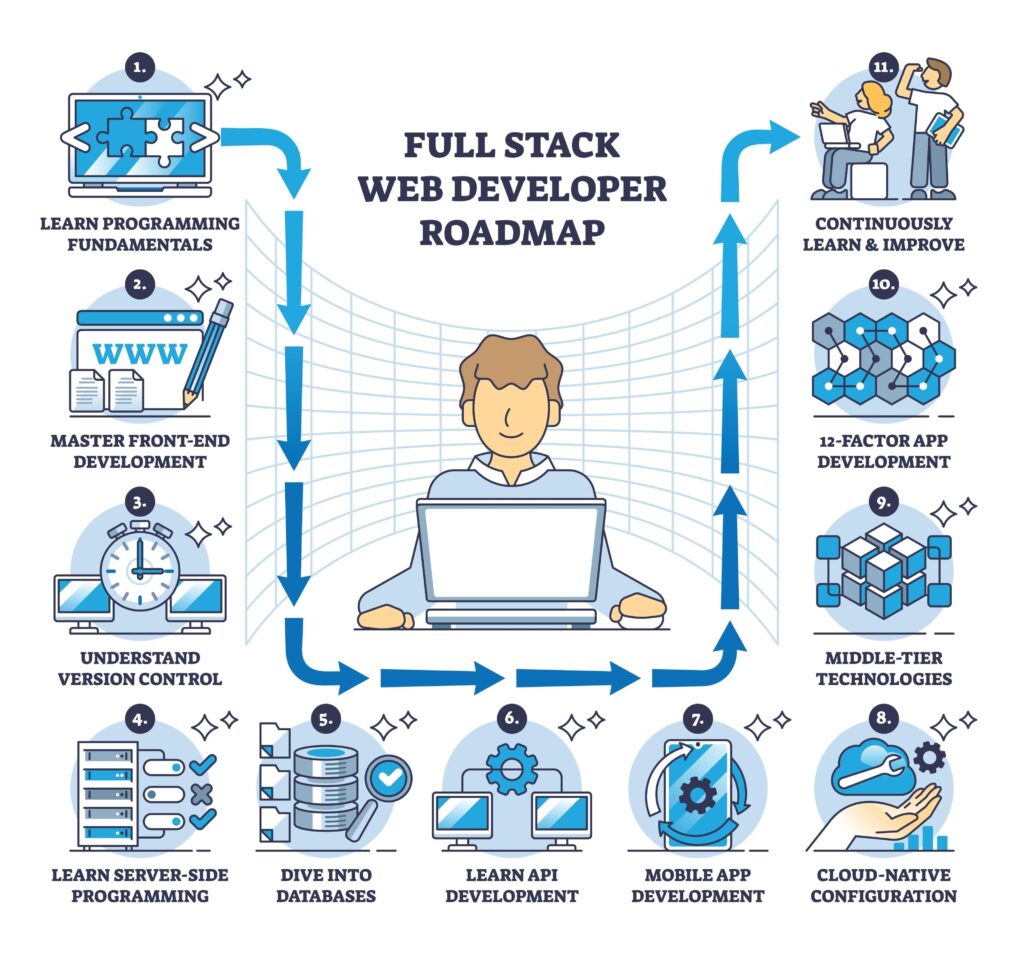
We believe that great development requires the focus of a monk and the creativity of an artist. Maybe you’re a student trying to break into the industry. Maybe you’re stuck in a cubicle dreaming of an exit strategy. Either way, this guide takes you from writing your first HTML tag to actually running an agency.
The Reality of Freelancing
Let’s clear up a common myth. Many people imagine freelancing from a cafe or a beach. While that’s possible, it only works if you have strong discipline.
When you go solo, coding is actually the easy part. Suddenly, you are the CEO, the sales rep, the marketing team, and the complaint department all at once. If you look at how our founder, Mohit Goyal, actually pulled this off, you’ll see a pattern. He didn’t just build websites; he built trust.
Ready to play the dual role of creator and entrepreneur? Let’s look at the roadmap.
Step 1: The Monk’s Discipline – Mastering the Skill Stack
You can’t build a career on weak code. To be a high-value freelance developer, you need a robust technical stack. However, you don’t need to know everything. You just need to be dangerous in a few key areas.
1. The Skill Stack: HTML, CSS, and JavaScript
These are non-negotiable.
HTML5: Understand semantic structure. A good developer cares about accessibility and clean code structure.
CSS3: This is where design comes alive. Don’t just learn Flexbox; learn how to handle cross-browser inconsistencies. A ‘pixel-perfect’ site that breaks on a client’s older Safari browser is the fastest way to lose a referral.
JavaScript: You don’t need to be a wizard immediately, but you must understand DOM manipulation to make sites interactive.
2. The CMS Powerhouse: WordPress
The web runs on WordPress. At our agency, much of our client satisfaction comes from delivering robust, custom WordPress solutions.
- Don’t just use page builders. Learn how the WordPress hierarchy works.
- PHP: Learn enough PHP to create custom themes or modify existing plugins.
- WooCommerce: E-commerce is a massive market. Knowing how to customize a store is a high-income skill.
3. The Hot Take: React & Node.js
Don’t rush into React. For most freelance clients (local businesses), a high-performance WordPress site with custom PHP will outperform a heavy React app in SEO and maintenance costs every time.
Once you have mastered the basics, exploring frameworks like React lets you build “Headless” WordPress sites or custom web applications, opening the door to higher-paying enterprise clients.
Step 2: Building a Portfolio That Speaks (The “Show, Don’t Tell” Rule)
In reality, your degree matters less than your portfolio. Clients want to see what you can do.
Why You Need a Personal Site
A top-tier portfolio isn’t just a gallery; it’s a lead magnet. It’s clean, fast, and clearly highlights expertise.
- Speed Matters: Ensure your portfolio loads in under 2 seconds.
- Case Studies: Don’t just post a screenshot. Explain the problem you solved. Did you improve the client’s SEO? Did you speed up their site?
- Testimonials: Social proof is currency. Even if you have to do your first few projects at a discount, get a glowing review in return.
What if I have no clients?
Instead of a Netflix clone, find a local NGO or a small business with a broken mobile menu. Fix it for free in exchange for a video testimonial. A real-world case study where you solved a real user’s frustration is worth 100 mock-up clones.
Step 3: The ‘Hunter’ Mindset – finding Clients
The idea of the “starving artist” is common because many skilled developers don’t know how to sell their services.
1. Freelance Platforms
Initially, these are great training grounds. The key to winning here is niche specialization. Instead of “I do web development,” try “I build high-converting landing pages for gyms.”
2. Networking & Branding
Ads are fine, but reputation is what actually scaled us.
- LinkedIn: Don’t just update your profile, use it to share real stories about tough problems you’ve solved. This shows your skills better than any certificate.
- Local SEO: This is the easiest win most developers ignore. If you are in Gurgaon or Delhi, optimize specifically for keywords like “Web Developer in [Your City].” Stop chasing global leads when there are clients in your backyard ready to pay right now.
3. Cold Outreach
Don’t send cold emails; they go to spam. Use the Audit Method: Record a 2-minute video of yourself navigating a prospect’s website. Point out a specific security flaw or a slow-loading image that is hurting their conversion. It’s hard to ignore someone who has already provided value for free.
Step 4: Pricing Your Services
One of the hardest questions for a freelancer is: “How much should I charge?”
- Hourly vs. Fixed: Many beginners start with an hourly rate basis, but fixed pricing helps you grow. If you can build a $1,000 website quickly because you’re skilled, you shouldn’t earn less just for being fast.
- Think in terms of value: A website is an investment, not just a cost. If your e-commerce site helps a client make $50,000 in sales, charging $5,000 is reasonable.
- Always use contracts: Don’t start work without a deposit (usually 50%) and a signed agreement. This protects your time and shows you are professional.
- The Value-First Rule: If a client asks about your hourly rate, focus instead on the project’s goals. Charging by the project rewards your expertise, while hourly rates can penalize you for working quickly.
Step 5: Managing Projects Like a Monk
Once you land the client, the real work begins. Client management is often harder than the coding itself.
Don’t Ghost Your Clients
We have a simple rule: Transparency.
- Update your clients regularly.
- If you might miss a deadline, let your client know as soon as possible.
- Use tools like Trello, Asana, or Notion to organize your project tasks.
The “Pixel-Perfect” Standard
Always deliver what you promised. Test your websites on all devices—mobile, tablet, and desktop. A broken layout can cost your client business and hurt your reputation. High-quality work leads to referrals.
Step 6: Scaling Up – From Freelancer to Agency
Eventually, you may have more work than you can handle alone. This is when you can shift from being a freelancer to running an agency.
We made this transition ourselves. By creating clear processes for onboarding clients, organizing code, and handling quality checks, you can start hiring other developers to help you.
- First, outsource your weaknesses: If you hate design, partner with a UI/UX designer.
- Focus on strategy: As you grow, your job shifts from writing code to ensuring the quality of the code your team writes.
Essential Tools for the Freelance Developer
To work efficiently, you need the right tools. Here’s a recommended set based on what’s common in the industry:
- Development: VS Code (Editor), GitHub (Version Control), LocalWP (Local WordPress Dev).
- Design: Figma (for UI/UX prototyping).
- Communication: Slack or WhatsApp Business.
- Hosting: Learn the basics of cPanel, AWS, or managed hosting to help your clients go live.
Conclusion: Start Your Journey
Becoming a freelance website developer is a journey of patience. There will be bugs you can’t fix at 2 AM. There will be clients who want the logo “bigger and pop more.”
However, there is also the thrill of launching a site that thousands of people use. There is the satisfaction of building a business on your own terms.
Take inspiration from our journey. Stay curious, stay disciplined, and keep coding. The digital world is waiting for your contribution.
Ready to build something great?
If you are looking for a team that has already mastered this journey to build your next project, Contact Us today. We turn complex challenges into smart, digital solutions.
Frequently Asked Questions
No, you don’t need a formal degree. While a computer science background helps, clients care more about your portfolio. Successful freelancers have practical skills, a problem-solving mindset, and a strong portfolio of real projects.
You can learn the syntax in 3 months, but you won’t be ‘freelance ready’ until you’ve successfully deployed a site to a live server and handled a DNS migration. That’s the moment you actually become a developer.
Yes, WordPress is still a profitable niche. It powers over 40% of the internet, and there’s strong demand for developers who can build custom themes, manage WooCommerce stores, and improve site speed. We regularly see clients looking for high-quality, custom WordPress work.
Many beginners start with hourly rates, but we suggest switching to project-based pricing as soon as you can. Think about the value you provide—if your website helps a client make sales, price it as an investment. Simple brochure sites cost less, while complex e-commerce projects can charge more.
Start by building a “concept portfolio.” Redesign the websites of local businesses or recreate popular landing pages to prove your skills. Use platforms like LinkedIn to showcase your work (public learning). You can also offer to build a few sites for friends or NGOs at a discounted rate in exchange for testimonials and case studies.
In the corporate world, these are two different people. The Designer lives in Figma, creating the “vibe” and visuals. The Developer lives in code editors, making those visuals functional. But here is the secret: In the freelance world, the highest-paid pros are the ones who can design a vision and code it into reality.
We are constantly on the hunt for people who balance discipline with creativity. If you want to learn how an agency actually runs, keep an eye on our site or follow Mohit Goyal on LinkedIn. That is where we post updates when we open the doors for new talent.
Stop worrying about “communication” and start worrying about Expectation Management. Here is the math: If you promise a feature in two days and deliver in three, you failed. But if you ask for four days and deliver in three? You’re a genius. Same amount of work, totally different reaction. Always bake in a buffer.
